Office Address

5 Star Offices, Eurovea Central I

Pribinova 4, 811 09 Bratislava

Phone

+421 902 716 045

Email

adam.pagac@dirac.sk

From Intention to Execution - Within Teams and Across the Organisation

I work with organisations and teams to regain confidence, rebuild performance, and move from “we should do” to “we’re doing now”.

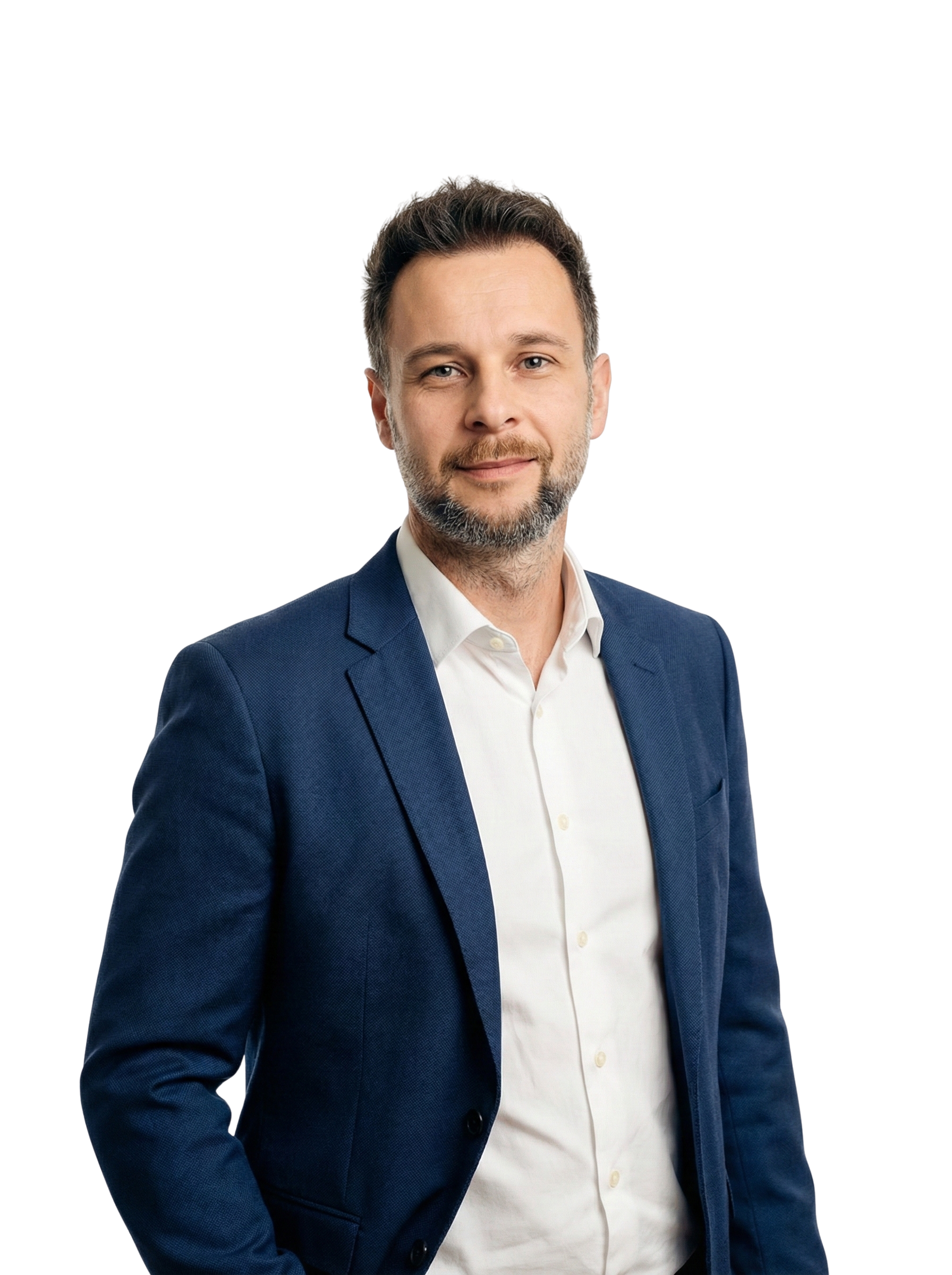
Adam Pagac

Where I Deliver Value
for Your Organisation.

I step into organisations in an interim leadership role at critical moments when clarity, structure,
or momentum need to be restored quickly.
My work combines hands-on leadership, stabilisation, and execution — giving teams
the direction, structure, and decision capacity they need
while permanent roles are still forming or existing structures are under pressure.

Interim management is not a consulting function.
It’s an active role: taking responsibility, aligning people, setting priorities,
and moving the organisation forward with confidence and discipline.

Leadership Transformation


I work with leaders to navigate complexity with greater clarity and consistency. Through structured guidance and practical leadership support. I strengthen communication, expectations, and behaviour – creating conditions where people understand the direction and feel supported to perform.
Situations I can help with:

  • leaders are overwhelmed with daily operations and lack space for strategic focus,
  • unclear expectations or inconsistent communication across teams,
  • team frustration caused by shifting priorities or slow decisions,
  • new or inexperienced leaders needing practical support, not theory.

Team Alignment & Performance


I work with teams to remove friction, rebuild alignment, and define what success looks like in practice.

Clear roles, transparent communication, and strong ownership are the foundation for restoring performance and creating a team that moves in one direction.

Situations I can help with:

  • overlapping responsibilities and unclear accountability,
  • teams “busy but not moving forward”,
  • declining motivation, rising frustration, early signs of burnout,
  • internal silos or conflicts are slowing execution,
  • people know what to do individually, but not collectively.

Strategy, Execution & Value Delivery

I turn strategic ideas into actionable plans that deliver real value, not just completed projects. 

Many strategies fail in execution — and even when executed well, they often fall short in delivering real value.

My role is to bridge strategy, domain understanding, and execution.

I make change understandable, manageable, and sustainable — so teams know what problem they are solving, why it matters, and what needs to happen next.

Situations I can help with:

  • strong strategy on paper, unclear path to value in practice,
  • initiatives aiming to build “products” through project-driven delivery,
  • teams delivering efficiently, but solving the wrong problem,
  • unclear business case or weak ownership of outcomes,
  • too many priorities competing without a clear value focus.
  •  

Crisis Management


When stability is threatened, I step in to restore order and control. I set a clear plan of action, guide the team through difficult decisions, and create the conditions for fast recovery.
The goal is simple: stabilise first, then rebuild momentum.

Situations I can help with:

  • projects at risk or already failing,
  • sudden leadership gaps or team instability,
  • loss of customer confidence due to delivery issues,
  • high turnover, missing skills, or burnout,
  • breakdown of processes leading to chaos and rework.

About me

My work sits at the intersection of people, domain, structure, and execution — with responsibility attached.

I step into organisations when change is clearly needed, but clarity, momentum, or alignment are missing. Not as an external advisor delivering recommendations, but as someone who takes ownership for moving things forward.

Over time, I’ve learned that lasting results rarely come from better plans alone. They come from people who understand their role, trust each other, and share a clear direction — and from leadership that is willing to act on that understanding. My focus is on aligning these elements so teams can perform with confidence, even in complex or demanding environments.

What makes my approach different is simple: I don’t optimise in theory. I work inside real constraints — existing teams, real deadlines, imperfect structures — and help organisations make progress without waiting for ideal conditions.

I’m most effective where structure is needed without bureaucracy, and leadership is required without ego. I value clarity over noise, ownership over heroics, and progress over perfection.

My role is not to observe from the outside, but to step in and turn uncertainty into movement. That means working closely with leaders and teams, clarifying what truly matters, and creating the conditions where decisions consistently lead to action.

I work best with organisations that value responsibility, openness, and the courage to act — even when the situation is not yet perfect.

Adam Pagac

Case studies.
From complexity to results.

FROM unknown delivery due date to
a clear, actionable plan in just 3 weeks

Delivery context:

  • custom software delivery
  • multiplatform solution
  • 40+ team members
  • 20+ integrations
  • 12 months already in progress

Before:

  • no reliable velocity data and unclear progress tracking
  • missing ownership and undefined responsibilities
  • fragmented communication across teams
  • integration issues blocking progress with no clear root cause

Action steps taken:

  • Established a single delivery baseline by auditing current plans, commitments, and integration dependencies
  • Introduced measurable velocity tracking across teams to replace status-based reporting
  • Clarified ownership and accountability for delivery, integrations, and decision-making
  • Reframed team setup and responsibilities to reduce handovers and dependency friction
  • Reset delivery ceremonies (planning, reviews, checkpoints) with a strict execution focus
  • Implemented a unified planning and reporting rhythm across all teams
  • Mapped integration bottlenecks end-to-end to identify true root causes
  • Prioritised and sequenced work around critical path milestones, not parallel wishlists
  • Introduced transparent progress visibility for stakeholders to reduce noise and surprises
  • Revalidated timelines and trajectories based on real capacity and velocity data

After:

  • calculated delivery velocity for both current and revised trajectories (6 vs. 3 months)
  • restructured teams and delivery ceremonies focused on execution
  • unified planning rhythm, roles, and reporting
  • significantly higher stability and fewer delivery surprises
  • major milestone achieved within 3.5 months (approx. €160k saved in unrealised costs)

From “what’s in the ticket?” to a true DevOps culture
in 6 months

Delivery context:

  • 50+ employee program
  • on-premise infrastructure (5+ environments)
  • 15+ integrations
  • high operational load with frequent changes
  • multiple teams depending on stable releases

Before:

  • fragmented support structure and processes driven by informal, custom-based rules
  • silo effects between development, operations, and infrastructure
  • frequent firefighting and unexpected incidents (heroes were necessary)
  • unclear ownership of environments, deployments, and incident handling 
  • highly inconsistent release procedures between teams
  • lack of monitoring and visibility into system health
  • upgrades and maintenance done ad-hoc with no long-term roadmap

Action steps taken:

  • Assessed existing support, deployment, and operational workflows to identify informal rules, hidden dependencies, and failure patterns
  • Clarified ownership of environments, deployments, and incident handling across development, operations, and infrastructure
  • Defined clear interfaces between teams to reduce silos and eliminate handover ambiguity
  • Introduced a shared release model to replace team-specific and ad-hoc deployment practices
  • Standardised core DevOps services to support both development and operational needs consistently
  • Aligned maintenance and upgrade activities into a visible, forward-looking roadmap
  • Reinforced cross-team collaboration through shared responsibilities, reviews, and operational touchpoints

After:

  • synchronised and predictable release processes across all teams established
  • standardised DevOps services supporting development and operations
  • communication channels were clarified, escalation paths defined, and transparent feedback loops put in place
  • visible and proactive maintenance and upgrade strategy created with clarified environment ownership 
  • cross-team collaboration becoming the default mode of work

From quiet quitting and frustration to
a stable and motivated workforce
in 8 months

Delivery context:

  • 90 – 110 employees
  • 12 – 14 teams
  • enterprise-level projects
  • custom software development
  • multiple delivery streams running in parallel

Before:

  • rising turnover and loss of key people
  • low engagement, unclear expectations, hidden conflicts
  • under communication, lack of information, strategy not understood consistently
  • silo effects between professions and teams
  • energy spent on firefighting instead of progress
  • weak leadership alignment and inconsistent priorities
  • over-complicated resource planning, budgeting, and internal processes

Action steps taken:

  • Conducted a structured assessment of team health, leadership alignment, and organisational friction points across teams and professions
  • Clarified strategic priorities and translated them into shared, understandable goals at team and organisational level
  • Reset leadership expectations and decision-making responsibilities to reduce inconsistency and mixed signals
  • Simplified internal processes, resource planning, and budgeting to remove unnecessary overhead and daily friction
  • Defined clear team responsibilities and interfaces to reduce silo behaviour and role ambiguity
  • Established regular, transparent communication routines to improve information flow and strategic understanding
  • Introduced practical mechanisms for addressing conflicts early and constructively, before they escalated or became hidden
  • Shifted focus from reactive firefighting to planned, forward-looking work through prioritisation and capacity alignment
  • Reworked hiring and onboarding practices to align selection criteria with real team needs and long-term fit

After:

  • internal processes and resource planning were simplified
  • clear responsibilities, shared goals, and transparent communication across teams were established
  • constructive conflict resolution and healthy collaboration between professions becames the norm
  • long-term focus replaced firefighting and rework
  • employee engagement, satisfaction, and motivation increased by 30%
  • retention improved and overall team stability increased by 20%
  • time-to-hire was reduced by 80% while improving the quality of candidate selection
  • onboarding costs were reduced by 25%

Let’s talk leadership.

Ready to discuss
your organisation’S needs?